Relationship with Jesus Is More Important Than Reputation
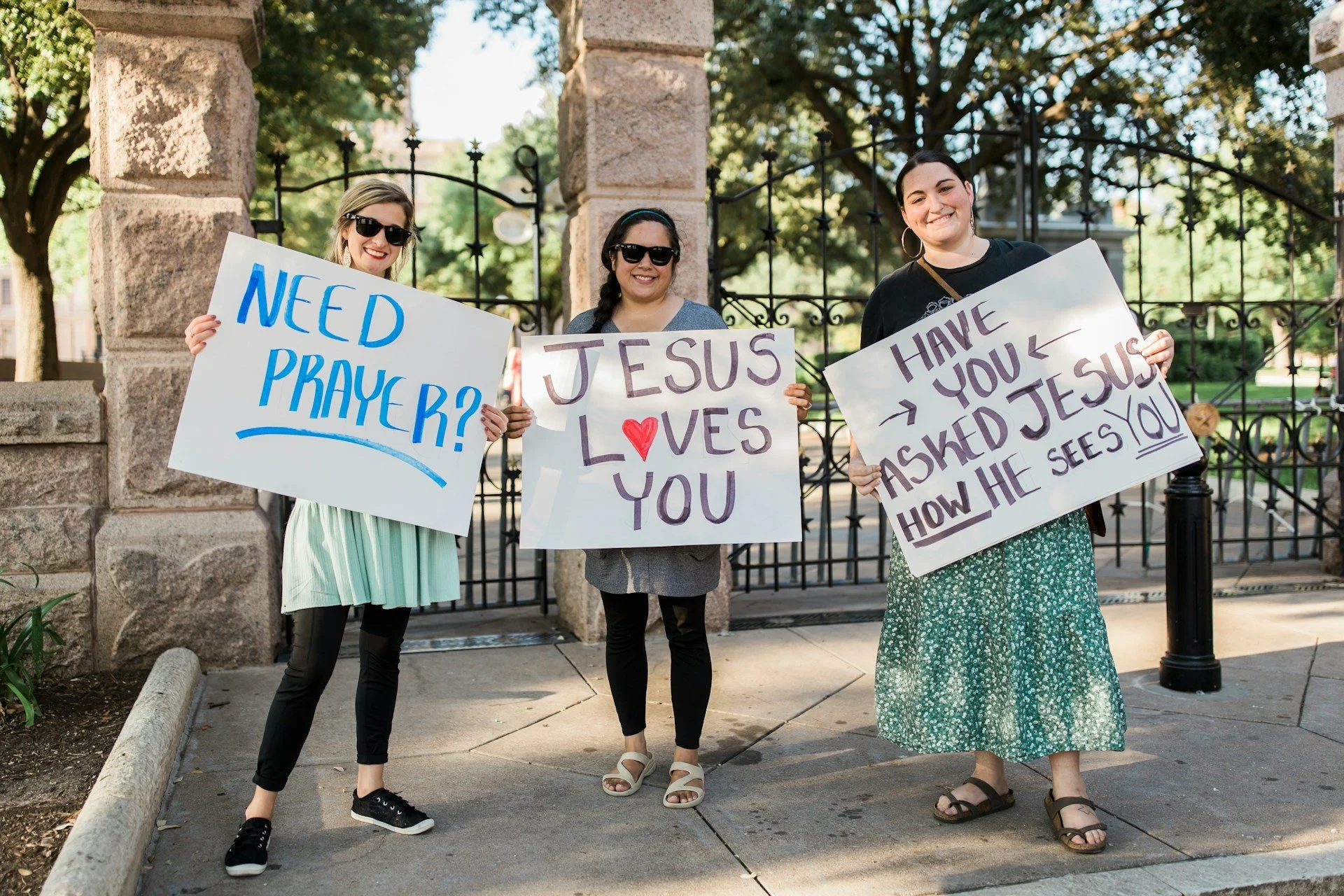
Photo by Jesus Loves Austin on Unsplash
“Not everyone who says to me, ‘Lord, Lord,’will enter the kingdom of heaven, but the one who does the will of my Father who is in heaven.” (Matthew 7:21 NIV84) [see full text in button/link below]
Who is a true Christian?
Many people profess a belief in God. According to various polls, a majority of Americans have some belief in God. But this does not translate into people who identify as Christian believers. But this is only part of the picture when it comes to faith and belief. [1]
The trend of people who identify as believers or Christians continues to decline. Perhaps what’s most surprising is how many people identify as believers but don’t adhere to a biblical worldview. [2]
Of the people who say they are born again, only one-fifth hold to a biblical worldview. This percentage drops dramatically among charismatic or Pentecostal churches (only 16 percent), mainline Protestants (8 percent), and only 1 percent in Catholic churches. And only 2 percent of believers between 18 and 29 years old held a biblical worldview as of 2020. [3]
Even before the COVID-19 pandemic, when churches stopped meeting in person, church attendance was on a steady decline. Although church attendance is not required to be born again or to hold Christian beliefs, this decrease in attendance shows the decline and weakness of American Christianity, which is even more rapid and pervasive in other Western nations.
The good news for those of us who are followers of Jesus is the growth of Christian believers in many other nations. Nations that were once the destination of missionaries are now sending out their own missionaries! And yet, there are still billions of unreached and unengaged people groups in the world. [4]
Insights
The number of unengaged people in America continues to increase, and it’s not because of immigration from other nations. Moral relativism’s cultural sway and the church’s diminished influence, particularly with youth, lead to fewer people engaging with the gospel.
As mentioned before, moral relativism and a vague populist view of what it means to be a Christian and go to heaven produce a shallow concept of belief in God. Relative morality, self-importance, and political influence undermine what Jesus said the nature of the Kingdom of God is.
Perhaps we’ve lost the sense of meaning for the word or title—Lord. The word for Lord in the original language of the Bible simply means a sovereign ruler. It can also include the meaning of master, but the context here in the Sermon on the Mount is related to who Jesus is as the Messiah (or Christ).
In America, we tend to resent and even reject class distinctions, including questioning those in authority. We see it as our right under the US Constitution. We claim that equality and democracy ought to remove such barriers to our freedoms. But the removal of all positions of authority results in anarchy, not equality.
Over the years, I’ve heard various people hold a nostalgic view of the first church, where they had “all things in common” (see Acts 2:42-47). I graduated from high school and started college at the apex of the “free love generation” of the sixties. It started with unfettered idealism, but crashed into the reality of a life founded on a false ideology. Communal living became a feature of this movement, along with the so-called “hippie movement.” Most of what is written about that era glorifies it as liberating, but that’s an idealistic and nostalgic view.
The Jesus Movement of the late sixties and seventies saw a plethora of Christian communes or communities all over the nation. We had one Christian house, as they were called then, about a mile from where our family first lived. It was called Mansion Messiah, and every so often I would go there for Bible studies.
My wife and I lived in a Christian community at a retreat center and church out in the low desert area of southern California in the early seventies. We learned a lot during those five years at the retreat center, but we look back on it as the best and worst of times. It was difficult. We had no position of authority nor formal wage. We were the “worker bees,” so to speak, and we ate all our meals together. And yet, the responsibilities of living in that community benefited us in many ways. What made it difficult was the limitation on our individual freedom as a family. I remember a week or more would go by when I didn’t leave the compound. As I said, we learned a lot, both good and not so good, and we gained lifelong lessons and built enduring relationships through that experience.
When we lived overseas in the Philippines, we lived and served on a compound we called Rainbow Village Ministries. It was a different type of communal living than our time in the desert, but it was still a community. We lived on the compound with anywhere from 25 to 40 children and the staff who assisted us in caring for these children. It was a 24/7 ministry, but Susan and I were the directors, not the “worker bees.” Our time at the retreat ministry was invaluable to us in overseeing a community of people that reached as many as sixty to seventy people at times. [5]
I share all this to say I understand what it’s like to live in a communal setting. Unless you’re the kingpin at the top of an authoritarian leadership structure, it strips away individualism for the sake of the community to operate well. This is a good thing, especially as a follower of Jesus, but it’s not a glorious experience as some may think. This is one reason communal living usually lasts for a season. Things changed even for the first church. But the ideal of having “all things in common” is still a kingdom value. One that needs to be internalized more than externally lived as a biblical ideal.
Citizens in the Kingdom of God acknowledge the Lord Jesus as the ruler of our lives with the promise of experiencing true equality as expressed in the practice of the Lord’s Supper (see Mark 10:43-45; 1 Corinthians 10:16-17; 11:17-20, 33-34).
True equality exists within God’s Kingdom because God humbled Himself to become human. Jesus, although God in nature, set aside His authority as God to be born into a family of no importance in the world. Although He was the Creator who spoke life into existence, Jesus laid His life down to submit Himself and His will to the Father (see John 10:17-18). He surrendered His life on the cross for our redemption (see Philippians 2:5-8).
What did Jesus do while on earth? He did what the Father directed Him to say and do (see John 4:34; 7:16). When His appointed time came to go to the cross as the Lamb of God, He submitted Himself to the Father (see Matthew 26:36-44).
This is what all followers of Jesus are called to do—submit ourselves to the Lord to do His will. This is why true equality exists within God’s Kingdom. We surrender our lives to the One who surrendered Himself to redeem us from the power of sin, death, and the devil (see Hebrews 2:14-18).
This is the earmark of true citizens of the Kingdom of God. They choose to do the will of God as their highest good. They don’t strive to do good works but rather to please the Lord of their lives.
True Wisdom
A serious truth and a strong warning. At first glance, these words of warning from Jesus may seem hard to accept. If people acknowledge Jesus as Lord, why would they not enter the Kingdom of God? Shouldn’t they get His recognition for all their efforts at doing good?
Claiming Jesus as your Lord isn’t the same as surrendering your life to Him as your Lord.
Here’s how Jesus put it in Luke when the time drew near for His redemptive death on the cross—
Then he said to them all: “Whoever wants to be my disciple must deny themselves and take up their cross daily and follow me.
For whoever wants to save their life will lose it, but whoever loses their life for me will save it. What good is it for someone to gain the whole world, and yet lose or forfeit their very self?
Whoever is ashamed of me and my words, the Son of Man will be ashamed of them when he comes in his glory and in the glory of the Father and of the holy angels. (Luke 9:23-26)
Again, professing Jesus as your Lord, but continuing to live as you please, will not lead to His favor. Doing what seems spiritual or saying spiritual-sounding words will not impress the Lord. He knows our hearts. He knows our motives. Those who would claim Him as Lord need to surrender their lives and their wills to Him. Jesus made this clear in a similar way later in Luke when He said—
“Make every effort to enter through the narrow door, because many, I tell you, will try to enter and will not be able to.
Once the owner of the house gets up and closes the door, you will stand outside knocking and pleading, ‘Sir, open the door for us.’ But he will answer, ‘I don’t know you or where you come from.’
Then you will say, ‘We ate and drank with you, and you taught in our streets.’ But he will reply, ‘I don’t know you or where you come from. Away from me, all you evildoers!’” (Luke 13:24-27)
This should remind us of “the narrow gate” and of Jesus’ warning about those in “sheep’s clothing.”
Citizens of God’s Kingdom are called to do the will of the Father, not their own. This is what it means to have Jesus as our Lord.
When we choose the will of the Father, we have to abandon our selfish will. This means that selfish ambition and self-importance are contrary to the values honored in God’s Kingdom.
The Lord is clear about this. All our efforts toward being spiritual will not be sufficient for entering His kingdom. Religiosity focuses on self-effort—to be good and do good things for God. But this leads to a false expectation of God’s recognition of us as being worthy of His kingdom.
Jesus wants us to be in right relationship with Him rather than doing things in His name to try to please the Lord and gain God’s favor. His favor—the loving-kindness of God—is only received because of His blessing on us as we choose to do His will rather than our own. Look at this solemn warning again—
“Not everyone who says to me, ‘Lord, Lord,’ will enter the kingdom of heaven, but only the one who does the will of my Father who is in heaven.
Many will say to me on that day, ‘Lord, Lord, did we not prophesy in your name and in your name drive out demons and in your name perform many miracles?’
Then I will tell them plainly, ‘I never knew you. Away from me, you evildoers!’” (Matthew 7:22-23)
Don’t expect the Lord to honor what you do by your effort to be a godly person. The Lord doesn’t need to join us in what we do by our efforts. We need to join Him as He comes alongside us to do His will (see Matthew 11:29). Are you looking and striving for God’s recognition as a righteous person? If so, it is a futile effort.
What the Lord Jesus desires is a relationship with you on His terms, not yours.
Reflections for Prayer
The Lord Jesus is clear that all our efforts for His sake are not sufficient for entering His kingdom. He wants us to be in right relationship with Him. Citizens of God’s Kingdom are called to do the will of the Father, not their own. This is what it means to have Jesus as our Lord.
Do you have difficulty accepting Jesus as your Lord? If and when you do, or struggle with this in daily life, ask the Lord to remind you of how He humbled Himself for you and me. Ask the Lord to guide you by His Spirit to surrender your will and life to Him on a daily basis.
Footnotes–
O’Reilly, D. (2018, November 2). When you say you believe in God, what do you mean? The Pew Charitable Trusts. https://www.pew.org/en/trust/archive/fall-2018/when-you-say-you-believe-in-god-what-do-you-mean
Mitchell, T., & Mitchell, T. (2024, June 27). In U.S., decline of Christianity continues at rapid pace. Pew Research Center. https://www.pewresearch.org/religion/2019/10/17/in-u-s-decline-of-christianity-continues-at-rapid-pace/
Barna Group. (2023, June 28). Signs of Decline & Hope among key Metrics of faith - Barna Group. https://www.barna.com/research/changing-state-of-the-church/
Barna Group. (2023b, August 16). A biblical worldview has a radical effect on a person’s life - Barna Group. https://www.barna.com/research/a-biblical-worldview-has-a-radical-effect-on-a-persons-life/
Petersen, J. (2020, May 29). Extremely Low Percentage of Americans Hold Biblical Worldview: An Interview with George Barna - Bible Gateway Blog. Bible Gateway Blog. https://www.biblegateway.com/blog/2020/05/extremely-low-percentage-of-americans-hold-biblical-worldview-an-interview-with-george-barna/
Is the Bible True? CRC Survey Shows America’s Distrust of the Bible Undermines Its Worldview. (2020). In American Worldview Inventory 2020 Results [Report]. https://www.arizonachristian.edu/wp-content/uploads/2020/04/CRC-AWVI-2020-Release-02_Faith-and-Worldview-1.pdf
Project, J. (n.d.). People Groups of the World | Joshua Project. https://www.joshuaproject.net/
Originally it was called Rainbow Orphanage, but as the ministry developed to minister to abused girls along with abandoned and abused children, we renamed it Rainbow Village Ministries. It began in 1990, and we closed it in 2014 with a grand reunion. Here is a short history, photos, and a final story of that reunion– Rainbow Village Ministries
This is an excerpt from a recently published book called The Heart and Soul of God’s Kingdom. Look for it on Amazon with my other books— Trip Kimball on Amazon
And you can also see some of my writing over on Substack too! Just click this link– Trip Kimball on Substack