Who Is Your Master?
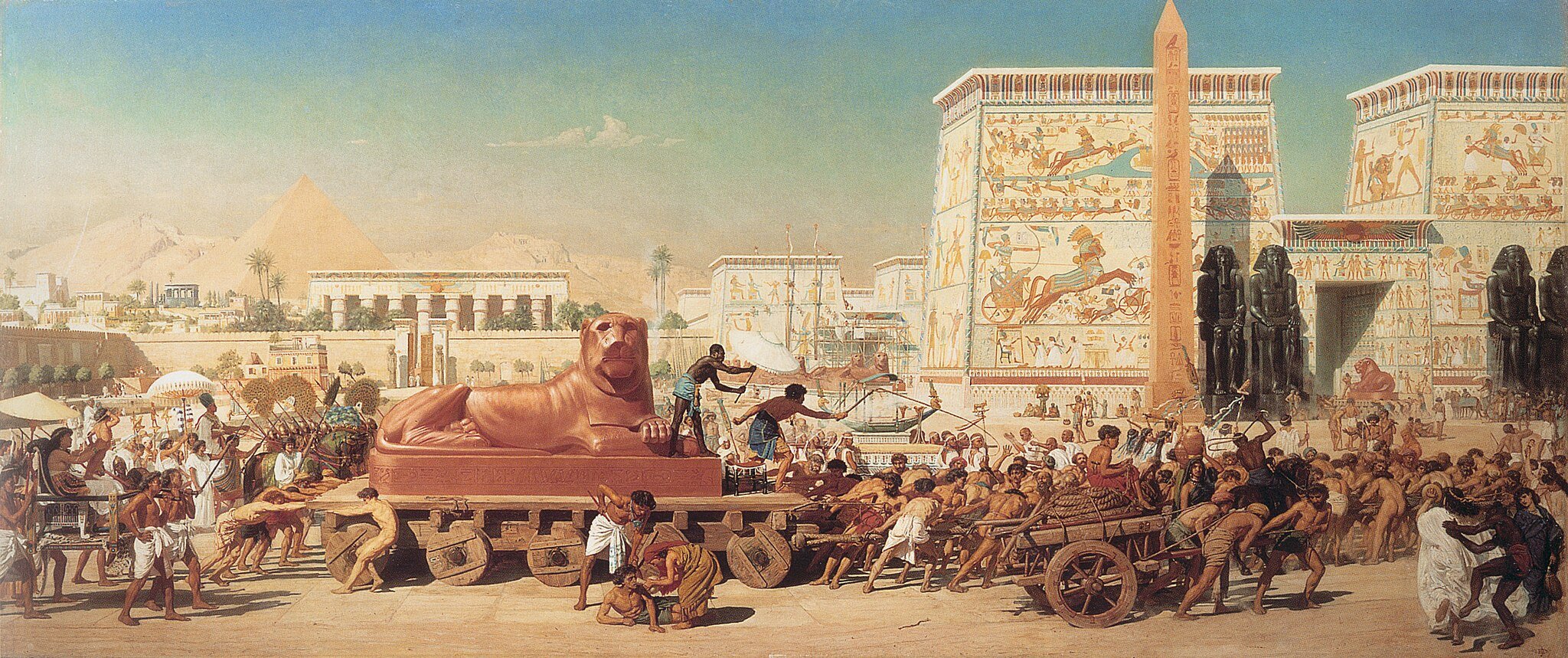
Edward Poynter, Public domain, via Wikimedia Commons
“No one can serve two masters. Either he will hate the one and love the other, or he will be devoted to the one and despise the other. You cannot serve both God and Money.” (Matthew 6:24 NIV84) [see full text in button/link below]
The Scourge of Slavery
The scourge of slavery is a blight on world history. Different forms of slavery have existed throughout the world for millennia. Today, we might think of more current forms of slavery, like sweatshop work conditions and human and sex trafficking.
But there was a time in history when people, living souls, were kidnapped, bought, and sold as possessions. This did not originate in America or Europe. It existed in ancient times, as we read in the early writings of the Bible. Slavery dehumanizes a person. It also exalts those who enslave people as masters in an evil and distorted sense.
During the Roman Empire, estimates vary on the percentage of the population that were slaves, but this number increased as the empire aged and began to crumble because of moral decay. Slavery included indentured servants within public roles, agricultural workers, and domestic slaves or servants. 1
No one. No human ought to be enslaved by another person. And no one deserves to be in the role of a master. It is immoral and evil. And yet, enslavement has existed through the ages and continues to exist today in many forms.
Bondage in any form and the enslavement of others are the direct result of humanity’s rebellion against God when the first humans tried to usurp God’s role and power (see Genesis 3:1-7). All of humanity suffered consequences because of Adam and Eve’s rebellion in the Garden of Eden. Because of their unwillingness to trust God’s warning not to eat of that one tree, all of humanity became subject to “the god of this age,” and physical death and illness prevailed through all generations. 2
America is touted as the freest and wealthiest nation in the world. For the most part, I’ve seen this verified with my travels to many parts of the world and life overseas. But there’s a paradox. Though we (Americans) may possess great wealth and freedom, it enslaves us in diverse ways. All we possess ends up possessing us as its master.
This is not a new reality. It is an age-old truth. Either we serve a benign and sovereign God by trusting in Him by faith, or the dark tyranny of possessions and wealth enslaves us. There is no middle ground.
If we allow ourselves to become slaves of material wealth, we fall under the tyranny of the darkest master of all—the devil. We see this with the temptation of Jesus in the wilderness (see Matthew 4:1-11). As we see Jesus did, we need to resist this dark master.
Insights
In the time of Jesus, the people of Israel understood the roles of master and slave or servant. Many, if not most, free citizens of the Roman Empire had slaves. Jews who were rich also had servants and slaves. Abraham, the father of Israel, had many slaves, as did Isaac and Jacob, until their descendants became slaves in Egypt.
Across much of the globe, people continue to recognize and adhere to social classes and positions. As Americans living in the Philippines, we had to adjust to this cultural reality. Although never requiring it, people addressed us with the titles related to our roles in life, never by our first names. Sometimes they prefaced our names with “M’aam” or “Sir” because of their customs.
Initially, we didn’t understand the importance of respecting this distinction of roles. It was uncomfortable for us, and we made our staff uncomfortable when we treated them as equals. This may sound strange, even arrogant on our part, but we learned as we went along. Our first awakening to this was when my wife prepared a birthday cake and a simple gift for our labandera (the woman who did our laundry by hand). Although intended to bless her, it embarrassed her. Thankfully, other Filipino staff in my office helped us understand.
Over the years, we adjusted to our roles as directors over two different ministries, both with staffs that grew to twenty or more at each ministry compound. Still, we treated our staff well, and we became close to several as friends and confidants. My office manager at the training center, who became a valuable confidant for Susan and me, would tell me, “Pastor, you don’t have to thank us for doing our jobs.” I told her, “Clar, I don’t have to, but I choose to because I appreciate your work.” They learned from us, just as we learned from them. Still, we would have preferred not to feel like “masters” in our roles as ministry directors.
Americans and most Westerners bristle at the idea of anyone acting as their master. However, our early days in America were tainted by the evil of slavery, with individuals being bought and sold by those who considered themselves their owners. Some of these so-called masters also claimed to be Christians. Thankfully, slavery was outlawed first in Britain, then in America, because of the tireless work of many Christians. 3
American culture is enslaved to consumerism and enamored with entrepreneurship and the acquisition of wealth. This may not seem like an evil form of slavery, but it’s a powerful master. Perhaps our fierce sense of individualism blinds us to how we become enslaved to our possessions and wealth, as well as our pursuit of such things.
Those who are most successful and influential often assume a sense of superiority over others. And those who have yet to attain the same success and influence exalt, flatter, and pursue those who seem to have wealth, power, and influence.
The religious leaders of Israel were blind to their own enslavement. They deceived themselves. Their arrogance and self-righteousness deluded them. Jesus uncovered this for all to see. Only they, blinded by their self-deception, couldn’t see it.
True Religion
Jesus states a simple truth—“No one can serve two masters.” It’s a double-edged dilemma. Neither the masters, whoever they may be, nor the person enslaved can maintain this pull in two opposite directions. The master will not tolerate it. The master expects and demands singular commitment.
The Lord told this to His people Israel (see Deuteronomy 4:24). God’s jealousy for Israel wasn’t a human jealousy born out of insecurity, but a purifying one. He is a consuming fire. The Lord wants the devotion of our whole heart. It’s a matter of fidelity and loyalty in relationship with Him.
Greed, materialism, fame, lust, and any other form of self-exaltation or self-gratification are all-consuming and destructive. Those things never satisfy, nor do they ever make the person feel fulfilled. They are tyrannical masters who will never be appeased.
In other Bible versions, it says, ”You cannot serve God and mammon.” The word money is often used in place of mammon, which is a difficult word to translate (see Matthew 6:24 NKJV). The general idea of mammon is materialism or wealth personified. In other words, what we hold as valuable, whether we are rich or poor. 4
Jesus explains the other side of this dilemma for us. We will either “hate the one and love the other,” or we will be “devoted to the one and despise the other.”
We see this played out and illustrated throughout the history of Israel. I believe Jesus alludes to this as an indictment of the Jewish religious leaders, who were religious elitists, self-righteous, and arrogant. Jesus later described them as “whitewashed tombs,” having a clean outward appearance but dead and decayed on the inside (see Matthew 23:27-28).
Let’s ask ourselves an honest question.
What is our true devotion?
The element of devotion is perhaps the most telling. Here is where self-delusion exists for us as believers. Whatever we devote our time, energy, actions, thoughts, and even our imagination to reveals who or what is our master. In a practical sense, what we put our trust in daily or in a time of crisis also reveals this.
We can confess Christ as our Savior and call Jesus our Lord, but is He? Are we more committed or devoted to a life of comfort and security than to following Jesus? The answer becomes apparent by our willingness and commitment to deny our selfish nature and die to ourselves.
The apostles James and John help to put a fine point on all this when they remind us that love for this world puts us at odds with God (see James 4:4; 1 John 2:15). So, we all must answer one simple question for ourselves.
Who is your master?
Reflections for Prayer
Jesus states a simple truth—“No one can serve two masters.” Whatever we devote our time, energy, actions, thoughts, and even our imagination to reveals who or what is our master. There is no middle ground.
When you find yourself enslaved to the tyranny of anything or anyone demanding your allegiance, turn to the Lord. Trust in Him as your Master. He will honor your commitment and devotion to Him.
Footnotes–
Tools, H. (2024, May 26). Life as a Slave in Ancient Rome: A Historian‘s Perspective - History Tools. History Tools. https://www.historytools.org/stories/life-as-a-slave-in-ancient-rome-a-historians-perspective
Wikipedia contributors. (2025c, August 17). Slavery in ancient Rome - Wikipedia. https://en.wikipedia.org/wiki/Slavery_in_ancient_Rome
The consequence resulting from man’s rebellion in the Garden of Eden began when God pronounced it in Genesis 3:15-17. Since that time, death and illness have plagued all of us, and the devil became the temporary “god of this age.” See the following–John 12:31; 2 Corinthians 4:4; Ephesians 6:12; Romans 5:12, 14, 21; Hebrews 2:14-15.
In Britain, Thomas Clarkson and William Wilberforce were important figures in the abolition of slavery, which paved the way for the abolition of slavery in the US about 30 years later. See the following sources below—
Wikipedia contributors. (2025, August 16). William Wilberforce. Wikipedia. https://en.wikipedia.org/wiki/William_Wilberforce
Wikipedia contributors. (2025a, July 15). Thomas Clarkson. Wikipedia. https://en.wikipedia.org/wiki/Thomas_Clarkson
Bruce, N. (2024, May 17). What Factors Brought about the Abolishment of Slavery? America Explained. https://www.americaexplained.org/what-factors-brought-about-the-abolishment-of-slavery.htm
See the following for more insight on “mammon.”
David Guzik. (2019, March 23). Your treasury: Matthew 6:19-24 [Video]. YouTube. https://www.youtube.com/watch?v=Qb5VI0Ll_Fs
Enduring Word. (2025, April 24). Enduring Word Bible Commentary Matthew Chapter 6. https://enduringword.com/bible-commentary/matthew-6/
This is an excerpt from a soon-to-be-published book called The Heart and Soul of God’s Kingdom. Look for it on Amazon with my other books— Trip Kimball on Amazon