God's Kingdom—The Prologue
Now when He was asked by the Pharisees when the kingdom of God would come, He answered them and said, “The kingdom of God does not come with observation; nor will they say, ‘See here!’ or ‘See there!’ For indeed, the kingdom of God is within you.”
Luke 17:20-21 NKJV
What we can learn from Jesus (and Paul) about God’s Kingdom
Jesus spoke of the Kingdom of God often. At the beginning of His public ministry, we’re told, “From that time on Jesus began to preach, ‘Repent, for the kingdom of heaven has come near’” (Matthew 4:17). The terms Kingdom of Heaven and Kingdom of God are equivalent. Matthew uses the Kingdom of Heaven, a more Jewish preference, while the other Gospels use the Kingdom of God.
When Jesus’ public ministry came to a close, He spoke of His kingdom once again. This time to a Roman governor—
Jesus said, “My kingdom is not of this world. If it were, my servants would fight to prevent my arrest by the Jewish leaders. But now my kingdom is from another place.” (John 18:36)
This statement of Jesus to Pilate is revealing. First, Jesus says His kingdom is “not of this world.” What did He mean by this? Exactly that! It is unlike any other kingdom on Earth, past or present. Then Jesus says, “My kingdom is from another place.” God’s kingdom transcends this world, even the universe and all that’s created. The nature of God’s kingdom differs from anything we are familiar with in this life. It’s not physical, but spiritual. It’s not temporal, but eternal. The Kingdom of God isn’t about religious requirements or restrictions. It transcends all religions, as the Apostle Paul indicates here—
For the kingdom of God is not a matter of eating and drinking, but of righteousness, peace and joy in the Holy Spirit. (Romans 14:17)
Jesus made this distinction between the world and His kingdom in many of His parables. His parables often begin with, “The kingdom of heaven is like…” After teaching the Parable of the Sower, Jesus explains the parable to them, but only after they ask Him why He taught the people in parables.
He told them, “The secret of the kingdom of God has been given to you. But to those on the outside everything is said in parables…” (Mark 4:11
This tells us something essential about God’s kingdom. It is unknown to the world at large. No one wanders into the Kingdom of God. God must reveal it to us for us to know it. Here’s what Jesus told Nicodemus, a member of the Jewish ruling council, who came to Him one night—
Jesus replied, “Very truly I tell you, no one can see the kingdom of God unless they are born again.” (John 3:3)
Jesus tells Nicodemus that he needs to be born again to see or enter God’s kingdom. The literal meaning of the term born again is from above. Nicodemus understood Jesus did not mean some type of physical rebirth, but he didn’t understand what Jesus meant. We see this as their dialogue continues.
“How can someone be born when they are old?” Nicodemus asked. “Surely they cannot enter a second time into their mother’s womb to be born!”
Jesus answered, “Very truly I tell you, no one can enter the kingdom of God unless they are born of water and the Spirit.
Flesh gives birth to flesh, but the Spirit gives birth to spirit.” (John 3:4-6)
After the second admonition to be born again, Jesus chastised Nicodemus for not understanding this. Here’s what Jesus says—
“You are Israel’s teacher,” said Jesus, “and do you not understand these things?
Very truly I tell you, we speak of what we know, and we testify to what we have seen, but still you people do not accept our testimony.
I have spoken to you of earthly things and you do not believe; how then will you believe if I speak of heavenly things?” (John 3:10-12)
What Jesus told Nicodemus goes for all of us. Entrance into God’s Kingdom isn’t achieved through any magical formula, prayer, blessing, or good deed on our part. Every person needs to be “born from above” by God’s Spirit to see or enter His kingdom.
We cannot be born again by gaining more knowledge or insight. It is God’s spiritual work in us from above. As Jesus said, “Flesh gives birth to flesh, but the Spirit gives birth to spirit.” The literal meaning of being born again—born from above—reveals this. We can ask God to be born again, but it’s purely God’s work that gives us new birth into His kingdom.
We are told this at the beginning of John’s gospel—
Yet to all who did receive him, to those who believed in his name, he gave the right to become children of God—children born not of natural descent, nor of human decision or a husband’s will, but born of God. (John 1:12-13)
The apostle Paul reminds the Corinthian believers of this truth in his essential teaching on the resurrection of Christ and our hope of resurrection—
I declare to you, brothers and sisters, that flesh and blood cannot inherit the kingdom of God, nor does the perishable inherit the imperishable. (1 Corinthians 15:50)
Where Is the Kingdom of God and When Will It Come?
In the famous “Lord’s Prayer” found in the Sermon on the Mount, Jesus teaches His disciples how to pray. He gives them an example of how to pray. Jesus mentions the Kingdom of God (Heaven) at the beginning of this prayer—
Our Father in heaven, hallowed be your name, your kingdom come, your will be done on earth as it is in heaven. (Matthew 6:9-10 NIV84)
What did Jesus mean when He said, “Your kingdom come, your will be done on earth as it is in heaven?”
Down through the centuries, religious leaders and theologians have given their definitions and interpretations of the Kingdom of God. When I was a young believer, I thought of the Kingdom of God as the Millennium, the one-thousand-year reign of Christ on the earth after His return. As I grew in my faith, reading and studying God’s Word, I realized there were many different ideas about the Kingdom of God.
Different Ideas About God’s Kingdom
The Jewish concept of the Kingdom of God became exclusive. It included only the Jewish nation and those who converted to Judaism. When Zerubbabel led the return of the exiles from Babylon, the hope of reestablishing the Kingdom of Israel as the Kingdom of God on earth was renewed.1
Over time, the expectation grew for a messiah who would come to rule over the earth. They expected a messiah who would be a combination of King David and King Solomon, the kings who reigned during the apex of the Kingdom of Israel. A warrior-statesman leader.
This was the prevailing thought when Jesus came to proclaim the heart and soul of God’s Kingdom. His view of God’s Kingdom and humble personage as Messiah was not embraced by the Jewish leaders of His day. Well, that’s a serious understatement. They disagreed with Him so much that they had Him crucified. They rejected the One for whom they had waited for centuries.
Following the birth of the church in Acts, a Christian concept of the Kingdom of God developed. It went through many iterations, and there are plenty of eschatological (last things or “end times”) views to choose from, which I won’t delve into here. The point is simply this—various views of the Kingdom of God developed over the centuries between the birth of the Church and now.
When I became a Christian believer during the early Jesus People Movement, we had an expectation of the soon return of Jesus. Many books and countless messages focused on Jesus’ return to set up the Millennium. The timing and manner of Christ’s return were a subject of debate based on various eschatological views. Because I came to faith during the early Jesus People Movement, I remember well the excitement and expectation of the return of Jesus, “catching up” the church, and then returning to establish His millennial kingdom at the end of the age.
As stated before, throughout church history, we can find many different views about the Kingdom of God. Yet, how often do we look at what Jesus said about the Kingdom of God? He spoke of the Kingdom of God many times in His parables, and His teaching in the Sermon on the Mount is a distillation of His view of it. After all, He is the Lord. It’s His kingdom!
Jesus’ view of God’s Kingdom was not only future but present.2 Consider how He answers the Pharisees in Luke’s Gospel—
Now when He was asked by the Pharisees when the kingdom of God would come, He answered them and said, “The kingdom of God does not come with observation;
nor will they say, ‘See here!’ or ‘See there!’ For indeed, the kingdom of God is within you.” (Luke 17:20-21 NKJV)
Jesus saw the Kingdom of God as present, not only as a future event yet to come. It wasn’t limited to the boundaries of ancient Israel, as thought by Israel, and during the times of the Crusades. It’s also not limited to an earthly millennial reign. The Kingdom of God transcends all earthly ideas.
In a simple sense, the domain of God’s Kingdom is wherever God reigns.
Does He reign on earth now? It doesn’t seem so.
But does God reign in our hearts?
Only you can answer that question for yourself.
The Sermon on the Mount is far more than a collection of moral admonitions we should follow to be more like Jesus. It is a declaration of the heart and soul of God’s kingdom. In these three chapters of the Gospel of Matthew, Jesus defines what the Kingdom of God is.
While we are in these mortal bodies on this spinning orb we call Earth, we can only see and know the Kingdom of God by faith. The Kingdom of God is personal and spiritual. We can only be a part of God’s kingdom through a personal relationship with God, which takes place when we are reborn spiritually.
This is how the Apostle Paul expressed it in the Epistle to the Ephesians—
I keep asking that the God of our Lord Jesus Christ, the glorious Father, may give you the Spirit of wisdom and revelation, so that you may know him better.
I pray that the eyes of your heart may be enlightened in order that you may know the hope to which he has called you, the riches of his glorious inheritance in his holy people, and his incomparably great power for us who believe. (Ephesians 1:17-19)
Reflections for Prayer
My prayer is that what you find written on the following pages will help open the eyes of your heart and understanding of God’s Kingdom. I don’t have the ability or power to make that happen, but the Lord does.
So ask the Lord Jesus to reveal Himself and the truth of His Kingdom to you, to give you insight into His Word, and hopefully, my words will make sense and be helpful, too.
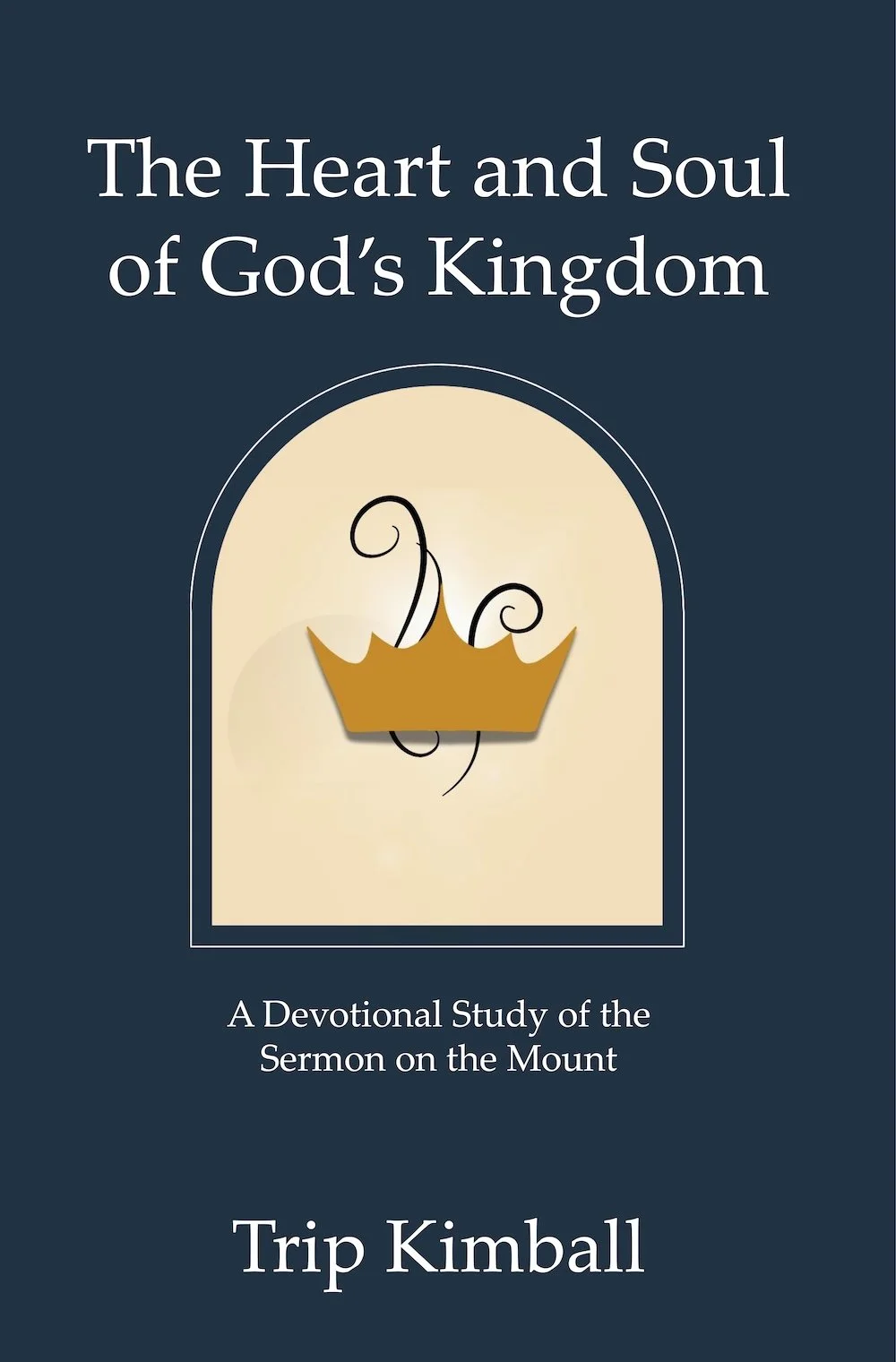
This is the prologue to my book, scheduled to be released on May 12, The Heart and Soul of God’s Kingdom: A devotional study of the Sermon on the Mount.
And you can also see some of my writing over on Substack, too! Just click this link– Trip Kimball on Substack